Technology is changing the way gyms manage their operations, control revenue, and communicate with members.
A few years ago, attendance lists, manual payment reviews, and membership cards might have been enough. Today, when a gym manages hundreds of members, different plans, classes, areas, and payment methods, these processes can lead to errors, financial losses, and an inefficient customer experience.
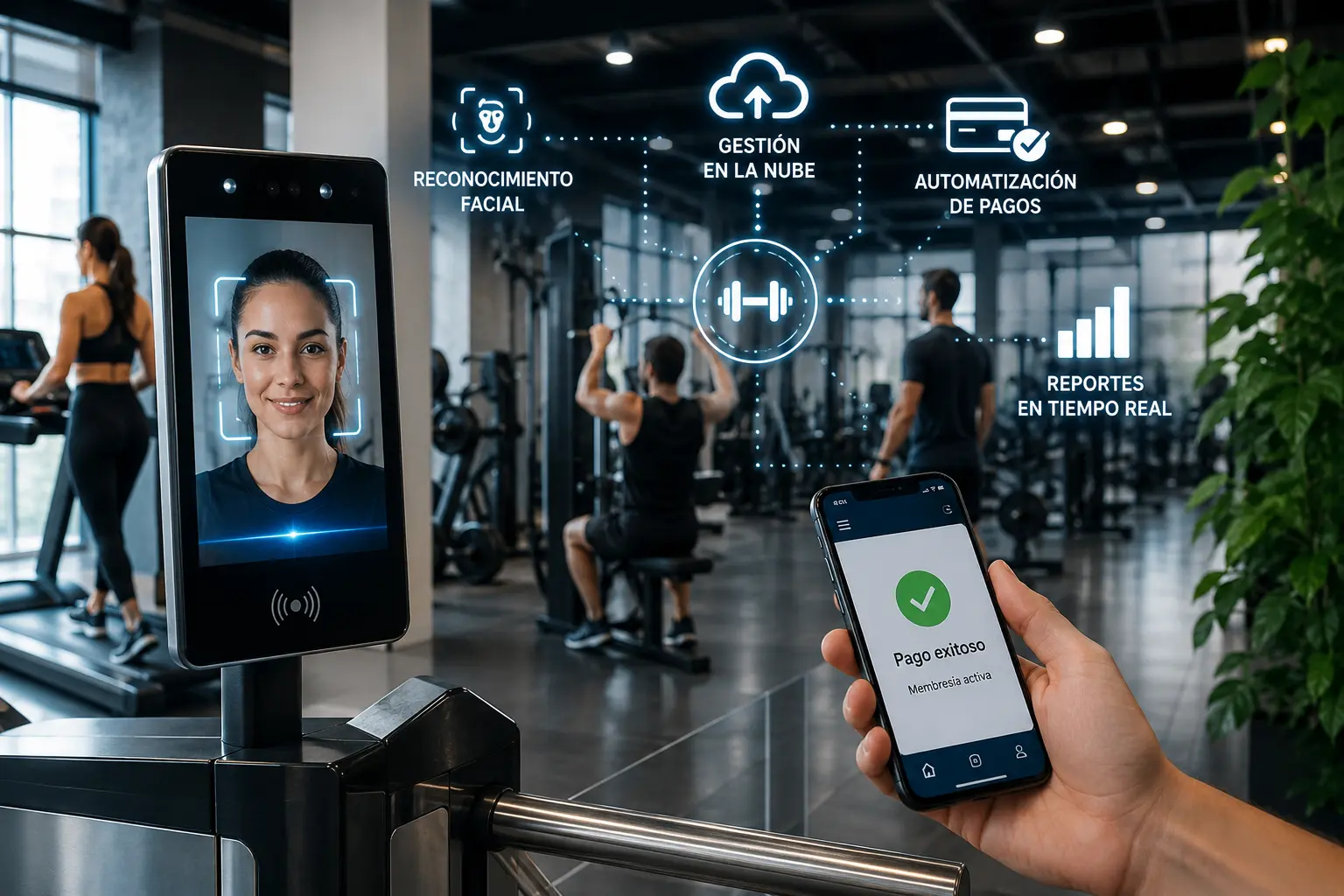
For this reason, more fitness centers across Latin America are adopting tools such as facial recognition, cloud-based management, payment automation, and real-time reporting.
These innovations are not designed to replace human interaction. Their purpose is to reduce repetitive tasks, improve administrative control, and help gym owners and managers make better decisions.
Why are gyms adopting new technologies?
Managing a gym involves much more than registering members and collecting monthly fees.
Every day, gym managers need to control:
- Who enters the facility.
- Which members have active plans.
- Which memberships are about to expire.
- How much revenue has been collected.
- Which classes are in highest demand.
- What the busiest hours are.
- Which products are being sold.
- How each location is performing.
When these processes are managed through separate tools or manual records, it becomes difficult to obtain a complete view of the business.
A gym management software can connect members, payments, access control, classes, and reports within a single platform.
The current trend is not only about digitizing information. It is about making all these processes work together.
1. Facial recognition for access control
Facial recognition is one of the technologies that is having the greatest impact on gym access.
Instead of presenting a card, membership ID, or code, the member identifies themselves in front of a device. The system recognizes their face and automatically checks whether they are authorized to enter.
Before granting access, the system can verify:
- Whether the membership is active.
- Whether the member is up to date with payments.
- Whether they are entering during their contracted schedule.
- Whether they have permission to use a specific location or area.
- Whether they have exceeded the attendance limit of their plan.
This process takes only a few seconds and reduces the need to review each case manually at reception.
What problem does facial recognition solve?
One of the most common problems in gyms is membership sharing.
Cards, key fobs, and access codes can easily be shared. Facial recognition links access to the member’s real identity, helping prevent unauthorized entry.
It can also automatically block members with expired plans, reducing the financial losses caused by people who continue using the facilities without renewing.
XCORE integrates facial recognition access control for gyms with membership, payment, schedule, and area information.
Control who enters and under what conditions.
Request an XCORE demo and discover how to automate member access.
2. Cloud-based gym management
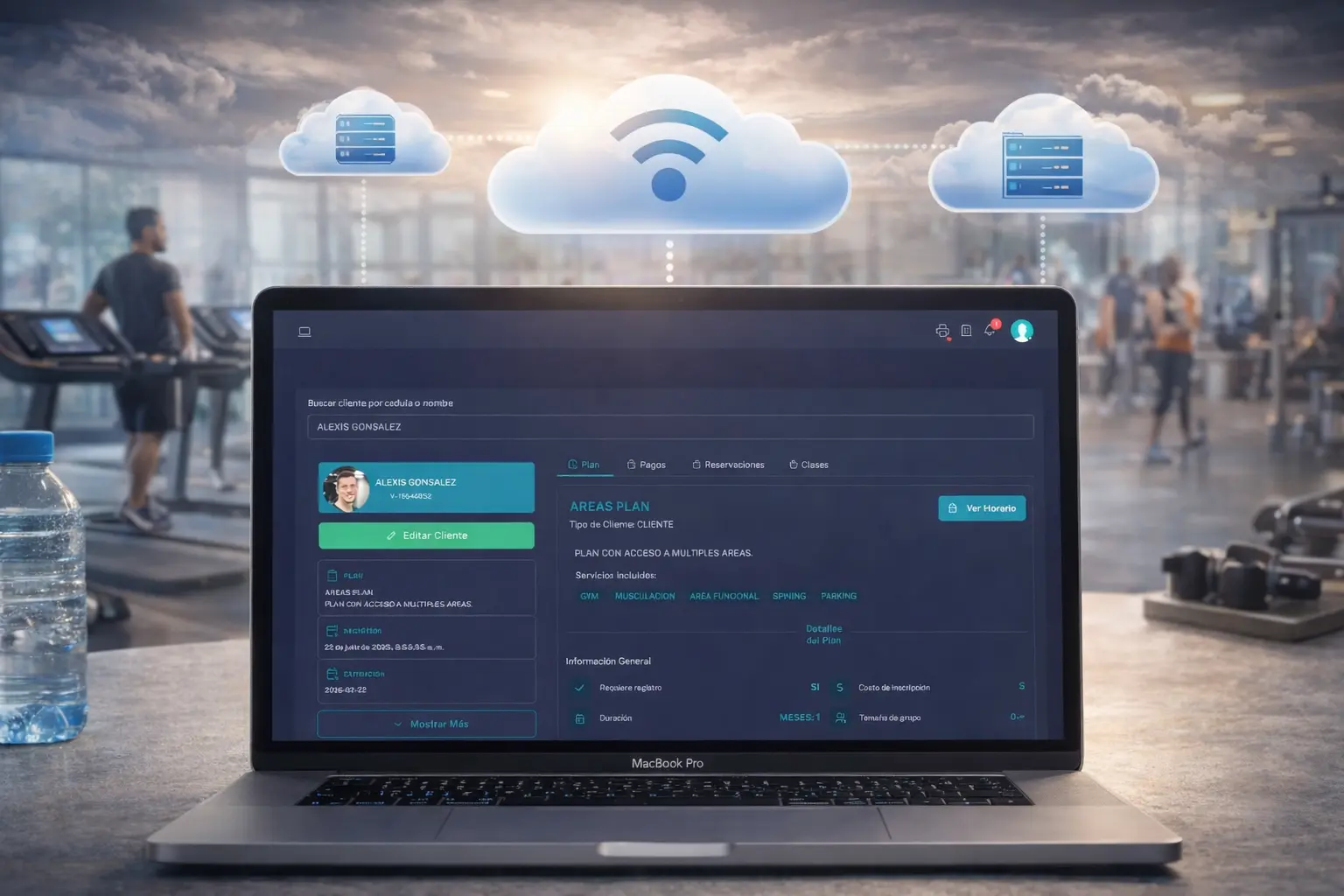
Cloud management allows gym owners and managers to access business information through a web browser without relying exclusively on a computer located inside the facility.
This trend is especially useful for owners who need to supervise the business remotely or manage multiple locations.
From a cloud fitness management platform, it is possible to review:
- Active and overdue members.
- Active and expired memberships.
- Payments and revenue.
- Attendance.
- Classes and reservations.
- Products and inventory.
- Expenses.
- Administrative reports.
- Performance by location.
The main advantage is having centralized and up-to-date information.
Instead of waiting for a report at the end of the day or checking different files, the manager can quickly understand what is happening in the business.
A cloud fitness management solution also supports business growth by allowing new users, processes, and locations to be added to the same platform.
3. Payment and membership expiration automation
Late payments are one of the biggest challenges affecting gym cash flow.
When payments are managed manually, staff members must review expiration dates, confirm bank transfers, update memberships, and contact each customer individually.
This process takes time and can lead to mistakes.
Automation connects the payment with the member’s status.
When a membership is renewed, the system can:
- Record the payment.
- Update the expiration date.
- Reactivate the plan.
- Enable access.
- Send a confirmation to the member.
When the plan expires, the system can also:
- Update the member’s status.
- Send a reminder.
- Notify the member about the overdue payment.
- Temporarily block access.
This connection reduces manual work and helps ensure that gym policies are applied consistently.
How does payment automation benefit the business?
Automating payments and expiration dates helps gyms:
- Reduce missed payments and administrative errors.
- Improve the recovery of expired memberships.
- Prevent overdue members from continuing to enter.
- Maintain clearer financial records.
- Reduce the workload at reception.
- Improve cash flow.
For the member, it also means receiving timely information about their plan and avoiding confusion when entering the facility.
4. Automated WhatsApp messages
WhatsApp has become one of the most widely used communication channels between gyms and their members in Latin America.
The difference between sending messages manually and using an automated integration lies in the ability to deliver the right information at the right time.
For example, a system can automatically send:
- A welcome message after registration.
- Payment confirmation.
- Membership expiration reminders.
- Overdue membership notifications.
- Renewal confirmation.
- Birthday greetings.
- Information about new classes.
- Campaigns for specific customer segments.
These communications help keep members informed and reduce the number of repetitive questions received by staff.
Messages can also be personalized with the member’s name, plan, and expiration date, creating a more useful and relevant communication experience.
5. Reports for better decision-making
Technology also allows gyms to transform daily activity into useful business information.
Every payment, access attempt, renewal, and reservation generates data. When this information is properly organized, it helps gym managers understand how the business is performing.
Some of the most useful reports include:
Revenue reports
These reports show how much money was collected during a specific period and which payment methods were used.
Overdue membership reports
They show how many members have expired plans, which memberships are about to expire, and how much revenue could potentially be recovered through renewal campaigns.
Attendance reports
They help identify:
- The busiest days.
- Peak attendance hours.
- Members who visit most frequently.
- Members who have stopped using the facilities.
Rejected access reports
These reports show how many access attempts were denied for reasons such as:
- Expired membership.
- Incorrect schedule.
- Area not included in the plan.
- Unauthorized identity.
Reports by location
For gyms with multiple branches, these reports make it easier to compare revenue, attendance, and renewal rates.
This information helps answer important business questions:
- Do we need more staff during specific hours?
- Which classes have the highest demand?
- Which location is performing better?
- How many members are becoming inactive?
- What percentage of members have overdue payments?
Technology does not make these decisions for the manager, but it provides more reliable information to support them.
Turn daily activity into better business decisions.
With XCORE, you can review revenue, members, attendance, and overdue payments from one platform. Schedule a demo.
6. Digital reservations and class management
Digital reservations are improving the organization of classes and activities with limited capacity.
When reservations are managed through messages or manual lists, several problems may occur:
- Overbooking.
- Empty spaces caused by unreported cancellations.
- Unauthorized members joining a class.
- Conflicts at reception.
- Difficulty understanding real demand.
A reservation system allows gyms to define:
- Maximum number of participants.
- Available schedules.
- Authorized membership plans.
- Number of contracted classes.
- Cancellation rules.
- Waiting lists.
This information also helps the gym understand which classes need additional schedules, which activities have low participation, and how instructors should be allocated.
7. Centralized management for multiple locations
The growth of fitness chains and gyms with multiple locations is increasing the need for centralized platforms.
When each location uses independent records, it becomes difficult to understand the overall performance of the business.
A multi-location solution can manage:
- Members.
- Payments.
- Access.
- Inventory.
- Employees.
- Shared membership plans.
- Reports by location.
- Consolidated results.
The system can also define whether a member has access to one location or several facilities, depending on the plan they purchased.
This capability makes expansion easier and prevents each new location from operating with separate processes.
8. Integration of all gym operations
The most important trend is not a single technology. It is the integration of all tools and processes.
A gym loses efficiency when it uses:
- One system for payments.
- A spreadsheet for attendance.
- A separate application for reservations.
- Access control devices that are not connected to memberships.
- Manually prepared reports.
In an integrated platform, all processes update each other.
For example, when a member pays:
- The payment is recorded.
- The membership is updated.
- Access is enabled.
- A notification is sent.
- The transaction appears in the reports.
This automation reduces errors and provides a complete view of the operation.
What benefits do these technologies provide?
Digital transformation should deliver measurable results for the gym.
The main benefits include:
Greater financial control
Connecting payments, memberships, and access control helps reduce overdue payments and revenue leakage.
Fewer manual processes
Staff members spend less time reviewing dates, preparing lists, and creating reports.
Greater security
Biometric recognition helps prevent membership sharing and records every access attempt.
Better member experience
Members can enter quickly, receive notifications, and reserve classes more easily.
Data-driven decisions
Gym managers can analyze revenue, attendance, and member behavior using updated information.
Greater capacity for growth
A centralized platform makes it easier to add new members, services, and locations.
How to begin the digital transformation of a gym
Not every gym needs to implement every feature at the same time.
The first step is to identify the main operational problems.
Gym owners should ask:
- Are overdue members still entering the facility?
- Are cards or access codes being shared?
- Are payments recorded manually?
- Is it difficult to know the real revenue?
- Are reliable reports unavailable?
- Do reservations create conflicts?
- Is managing multiple locations becoming complicated?
After identifying these issues, the most important processes can be prioritized:
- Member registration.
- Memberships and payments.
- Access control.
- Attendance.
- Reports.
- Reservations and communications.
The key is choosing a solution that can grow with the business and connect all these processes.
XCORE and fitness innovation in Latin America
Gyms in Latin America need technologies adapted to their real operational needs.
Having a member database is not enough. Gym operators also need to control access, payments, overdue memberships, classes, products, and business performance.
XCORE brings together:
- Facial recognition and biometric access control.
- Member and membership management.
- Payment and expiration automation.
- Class and area management.
- Administrative reports.
- Product and inventory management.
- Multi-location administration.
- Automated communications.
- Cloud management tools.
With more than 14 years of experience in the fitness industry, XCORE develops solutions designed to address real gym management challenges: unauthorized access, revenue loss, administrative disorder, and lack of reliable information.
Conclusion
The technology trends transforming gyms in Latin America share one common goal: improving business control.
Facial recognition helps verify who enters. Cloud management makes supervision easier. Payment automation helps reduce overdue memberships. Reports support better decisions with real information.
Gyms that adopt these tools will be better prepared to grow, improve the member experience, and protect their revenue.
XCORE supports this transformation through a platform that connects gym administration, access control, and business performance in one environment.
Take your gym management to the next level.
Request an XCORE demo and discover how to integrate access control, payments, members, and reports into a single solution.
Frequently Asked Questions
What are the main technology trends for gyms?
The main trends include facial recognition, cloud management, automated payments, digital reservations, automated messaging, and real-time reporting.
How does facial recognition help a gym?
It verifies the member’s identity and checks whether their membership is active before allowing access.
What are the advantages of cloud gym management software?
It allows remote supervision, centralizes information, and makes it possible to review members, payments, attendance, and reports from different locations.
Can automation reduce overdue payments?
Yes. Automatic reminders, membership updates, and access blocking can help improve payment recovery.
Are these technologies suitable for small gyms?
Yes. They can also help small gyms organize their operations, reduce errors, and prepare for growth.